MUTUAL DIVORCE

Mutual divorce, legally known as divorce by mutual consent, is a process in which both spouses agree to dissolve their marriage amicably. Unlike contested divorce, where one party files a case against the other on specific grounds, mutual divorce is based on joint agreement that the marriage has broken down irretrievably and there is no possibility of reconciliation.
In India, mutual divorce is governed by different personal laws depending on the religion of the parties. Under the Hindu Marriage Act, 1955 (Section 13B), Special Marriage Act, 1954, and corresponding provisions under other personal laws, mutual divorce provides a quicker, less stressful, and more respectful way to end a marriage.
Conditions for Mutual Divorce
For a mutual divorce to be granted, certain legal conditions must be fulfilled:
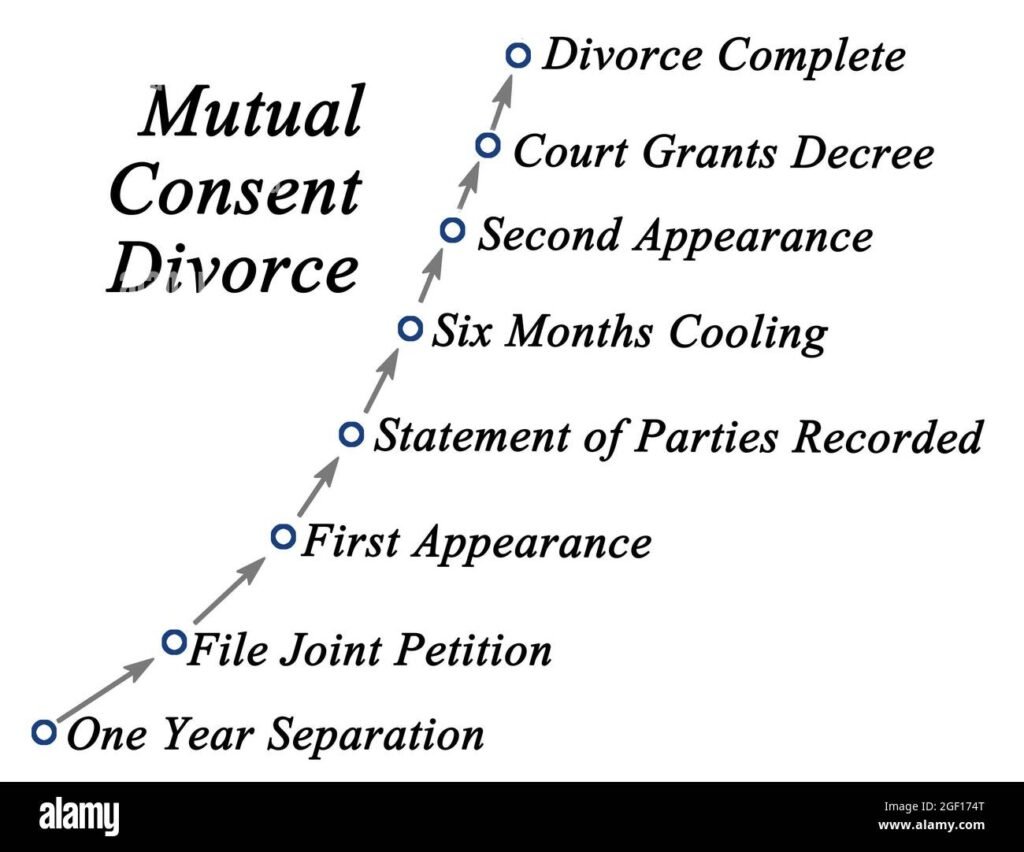
Living Separately: The husband and wife must have been living separately for a minimum period of one year (under Hindu and Special Marriage Acts). “Living separately” does not necessarily mean living in different houses; it means not living as husband and wife.
Mutual Consent: Both parties must voluntarily agree to the divorce without any force, fraud, or coercion.
Irretrievable Breakdown of Marriage: Both spouses must agree that the marriage has broken down and cannot be continued.
Settlement of Issues: All matters relating to maintenance, alimony, child custody, visitation rights, and division of property must be mutually settled before filing the petition.
Procedure of Mutual Divorce
The process of mutual divorce generally involves two motions:
First Motion: Both parties jointly file a petition before the Family Court. Their statements are recorded, and the court examines whether the consent is genuine.
Cooling-Off Period: Traditionally, a six-month waiting period is provided between the first and second motion to allow the parties time for reconciliation. However, the Supreme Court of India has held that this period can be waived by the court if there is no chance of reunion and all issues are settled.
Second Motion: After the cooling-off period (or its waiver), both parties again appear before the court to confirm their consent. If the court is satisfied, a decree of divorce is granted.
Advantages of Mutual Divorce
Time-saving compared to contested divorce
Cost-effective due to fewer hearings
Less emotional stress for both parties
Privacy and dignity are maintained
Amicable resolution, especially beneficial when children are involved
Conclusion
Mutual divorce is a practical and humane legal remedy for couples who have mutually decided to part ways with dignity. It encourages cooperation, minimizes conflict, and allows both parties to move forward with their lives peacefully. However, it is always advisable to seek guidance from a qualified legal professional to ensure that the process is handled correctly and that the rights of both parties are adequately protected.